
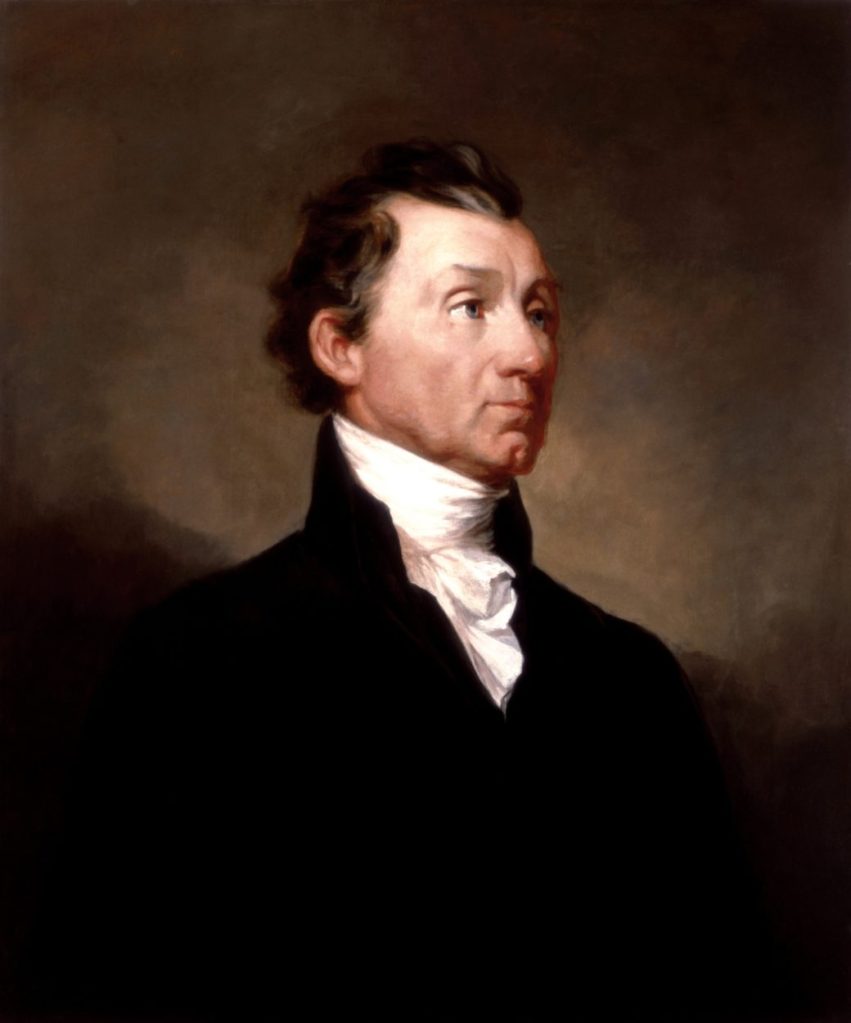
James Monroe
1758-1831
The Fifth President of the United States of America
Presidential Term from March 4, 1817 to March 4, 1825
James Monroe
1758-1831
The Fifth President of the United States of America
Presidential Term from March 4, 1817 to March 4, 1825
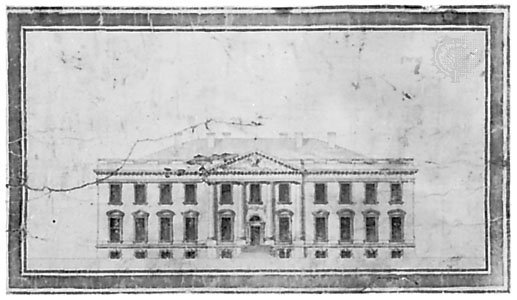
“To James Hoban, architect,
I have included in this letter details for upgraded features for the Executive Mansion. The escape tunnels may become useful should a future president need them.
-James Madison 1815

*I will preserve the original façade! H.S. Truman
**I love the escape tunnels! G.W. Bush”

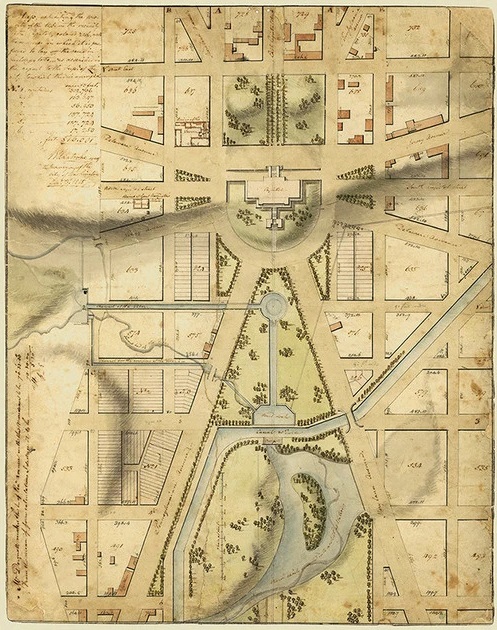
I’m not seeing any upgrades nor escape tunnels. One of the maps has a small handwritten note on it though. “Use this map in the event of a Fire”. -Veritas
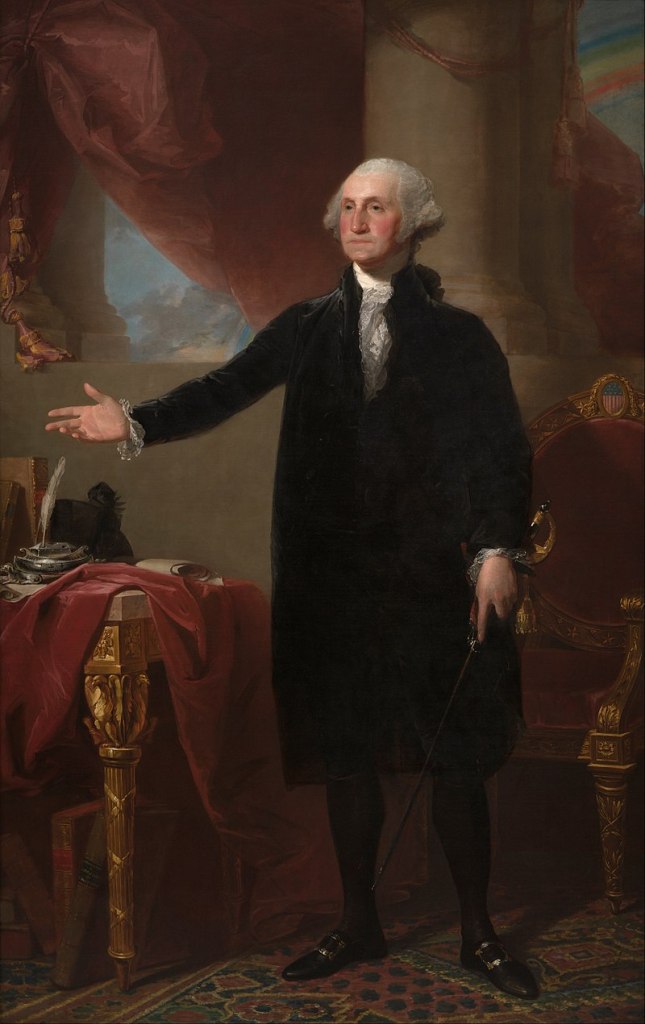
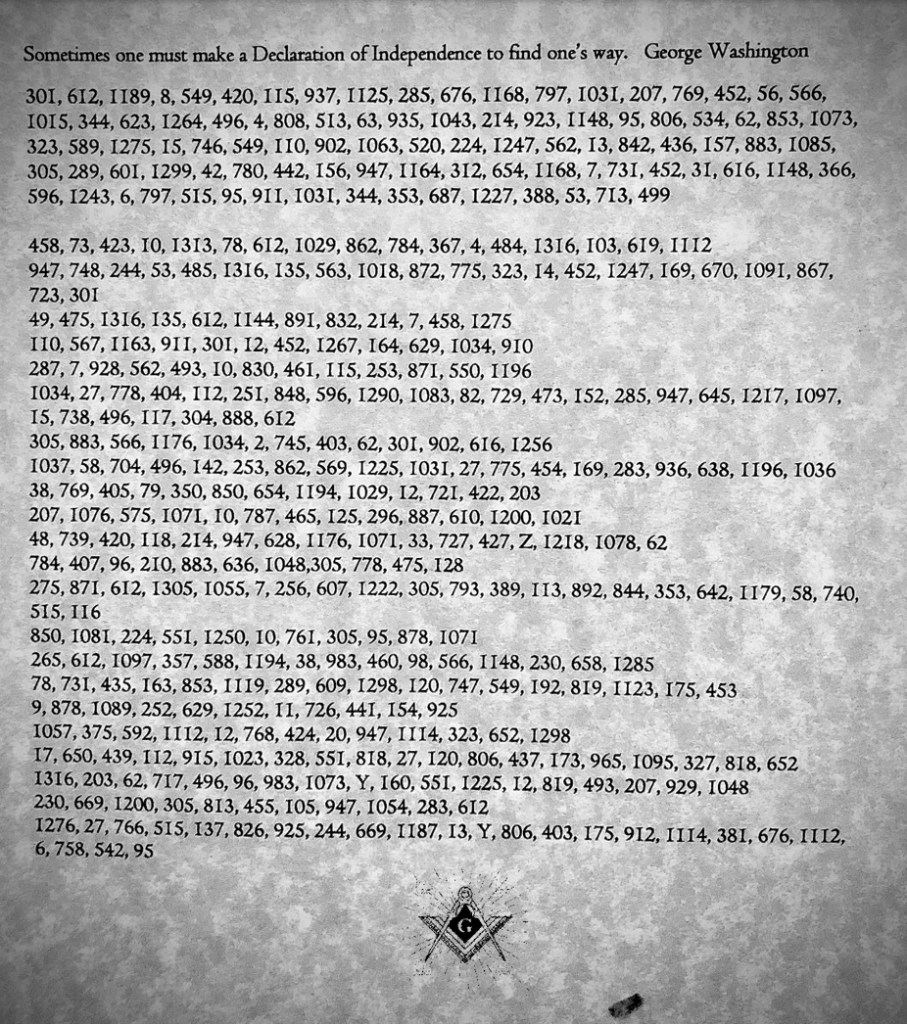
“I am deeply embarrassed to lose our nation’s capital to the British so easily. Fortunately, my wife Dolley was quick-witted enough to save the portrait of George Washington before the British burned down the Executive Mansion. We discovered this cipher on the back of the portrait and have yet to determine its meaning. I only recognize the symbol for the Freemasons of which I know George Washington was a high ranking member. What secrets could have been so important that it was kept on the back of this portrait? I must determine its meaning.
-James Madison 1814″
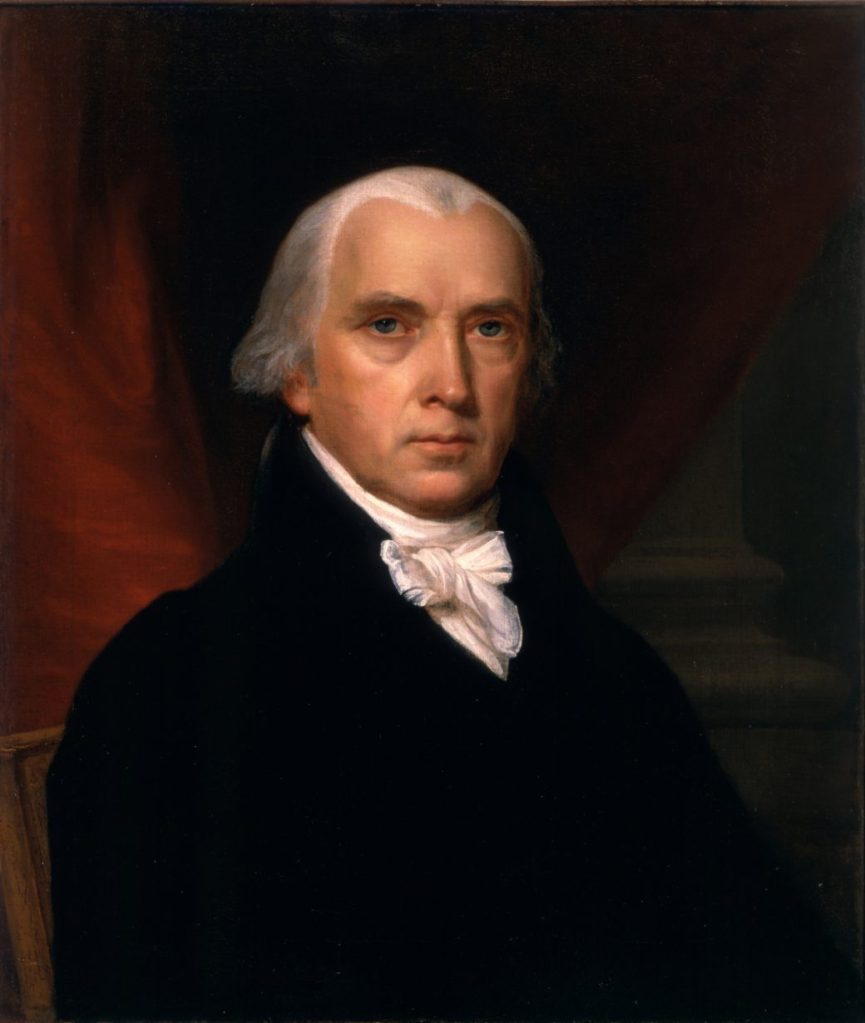
James Madison
1751-1836
The Fourth President of the United States of America
Presidential Term from March 4, 1809 to March 4, 1817
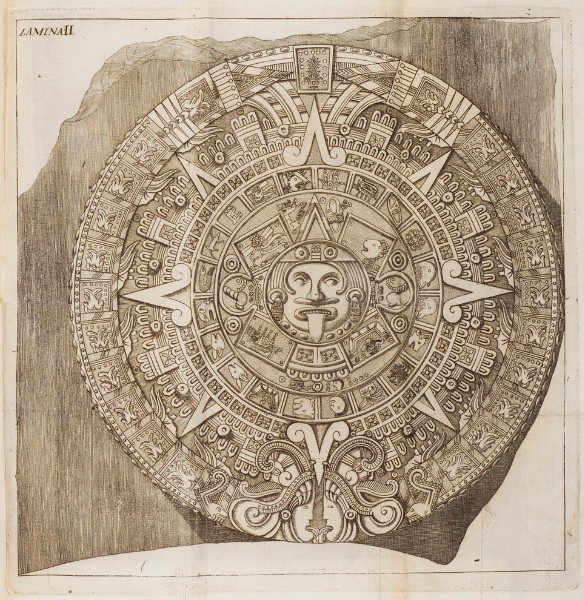
“A few years ago, carpenters discovered this stone artifact at the Mexico City Cathedral. In 1792, a Mexican astronomer and anthropologist named Antonio de León y Gama theorized that the disk was meant to be a calendar. This proves to me that the Native Americans have a rich history of civilizations and written language. There were older civilizations here of similar stature to the ancient Egyptians or Greeks.
-Thomas Jefferson 1808″
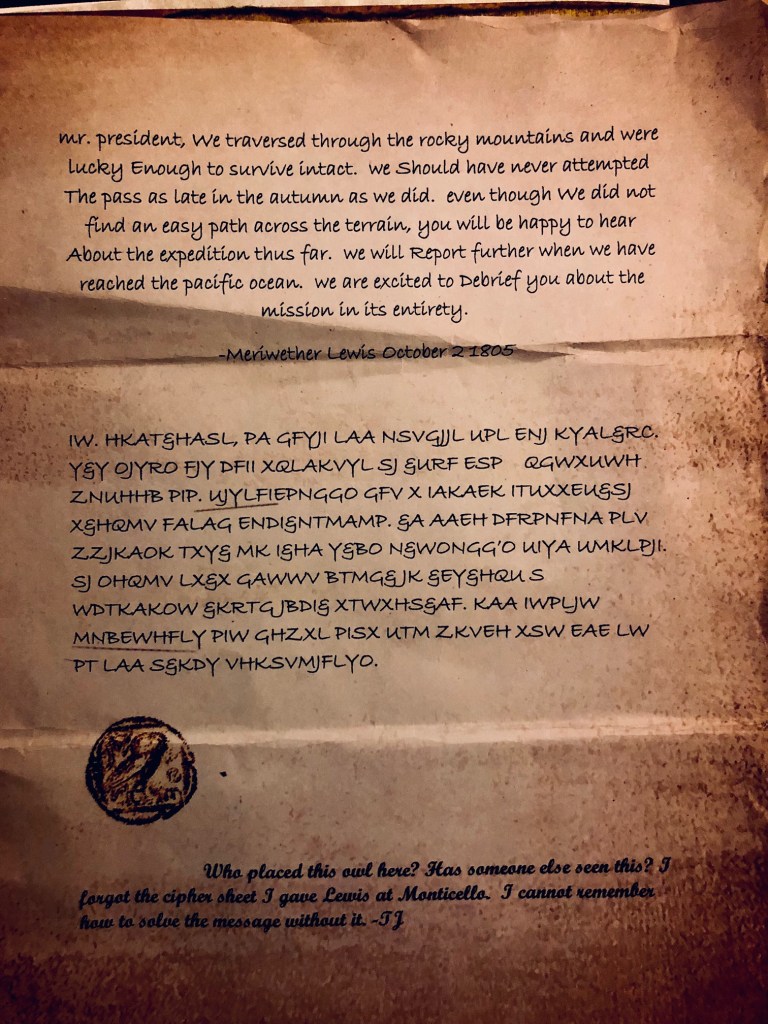
“mr. president, We traversed through the rocky mountains and were lucky Enough to survive intact. we Should have never attempted The pass as late in the autumn as we did. even though We did not find an easy path across the terrain, you will be happy to hear About the expedition thus far. we will Report further when we have reached the pacific ocean. we are excited to Debrief you about the mission in its entirety.
-Meriwether Lewis October 2, 1805
IW. HKAT&HASL, PA GFYJI LAA NSVGJJL UPL ENJ KYAL&RC. Y&Y OJYRO FJY DFII XQLAKVYL SJ &URF ESP QGWXUWH ZNUHHB PIP. UJYLFIEPNGGO GFV X IAKAEK ITUXXEU&SJ X&HQMV FALAG ENDI&NTMAMP. &A AAEH DFRPNFNA PLV ZZJKAOK TXY& MK I&HA Y&BO N&WONGG’O UIYA UMKLPJI. SJ OHQMV LX&X GAWWV BTMG& JK &EY&HQU S WDTKAKOW &KRTG JBDI& XTWXHS&AF. KAA IWPLJW MNBEWHFLY PIW GHZXL PISX UTM ZKVEH XSW EAE LW PT LAA S&KDY VHKSVMJFLYO.
Who placed this owl here? Has someone else seen this? I forgot the cipher sheet I gave Lewis at Monticello. I cannot remember how to solve the message without it. Hopefully he remembered to change the code. -TJ”
There is a lot going on here. I did my best to keep all the upper and lowercase letters exactly as they appear in the book. I just have a feeling it’s important somehow. I tried typing the message into an automatic cipher solver on the internet with no luck. It’s crazy to think that a cipher written all the way back then can somehow beat a computer. Anyone out there able to solve this?
-Veritas

“Although I deplore the man, I know Adams is correct. We should find a source of income through the natural resources of this land, and perhaps a city of gold or two. My intentions were to decrease the power of this office, and hypocrisy is not in my nature. However, I have decided to purchase the Louisiana Territory from the French without first requesting permission through Congress. Napoleon is completely focused on conquering Europe. I see now that this opportunity to purchase such a vast amount of land from the French will not last forever. Hopefully, the natural resources alone will be enough to pay our debts and remove our need of a national bank. There should be a few gold veins out there, and perhaps a gold city or two.
-Thomas Jefferson 1803″
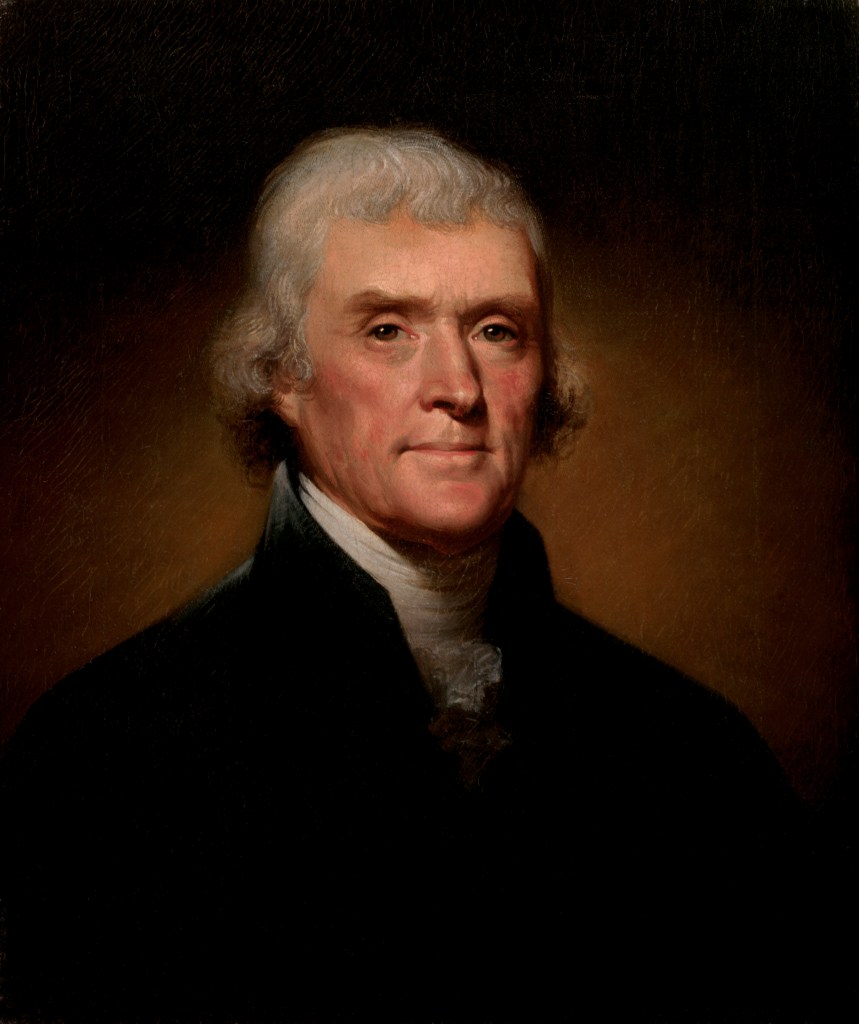
Thomas Jefferson
1743-1826
The Third President of the United States of America
Presidential Term from March 4, 1801 to March 4, 1809

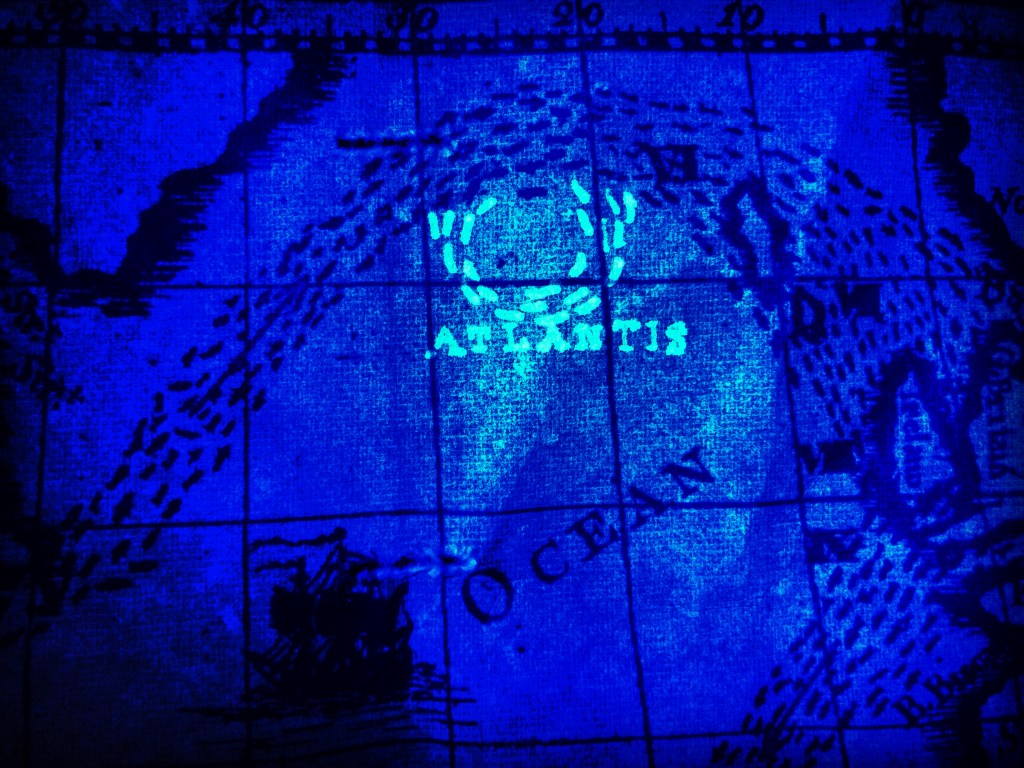
Holy smokes! I was trying a few experiments to see if there was any invisible ink on the map. I tried a few tricks like lemon juice and vinegar with no luck. When I turned on a blacklight, Atlantis lit up like a Christmas tree! I know I got lucky this time because they didn’t have blacklights back then and I’m not sure what type of invisible ink was used. Just knowing that there is more in this book than what’s visible at first glance is both exciting and nerve-racking. I don’t want to miss anything. Please let me know if you see anything in these images I’m uploading.
-Veritas

“An anonymous source has sent an old letter to my office. It is a brief autobiography from a man named Estevanico. He was a Moroccan man who became a slave to the Spanish, and he may have been the first African man to step foot on American soil. King Charles V sanctioned the Narváez expedition to explore Florida in 1528. Storms forced the ships to take shelter along the east coast in the Gulf of Mexico. The expedition leader Narváez ordered the ships to continue sailing north in search of a large port while he led the majority of his crew by foot. He made a huge miscalculation and never saw his ships again. Narváez had the men build canoes to travel as far as they could along the coast. Another storm separated the boats and crew. All perished expect for Estevanico and three others who washed ashore on what is now Texas. Estevanico survived by learning the languages of several Native American tribes. He convinced them that he was a healer and was thereafter respected as a medicine man. After 8 years, the four men finally entered Mexico City and told their story. The Spanish Navy brought Estevanico to Spain to speak before King Charles V. He told the king a wonderous tale of the Seven Cities of Cibola. A legend not only described by Native Americans, but one that he saw with his own eyes. Each city is brimming with gold. Gold bricks construct the brilliant architecture. Every citizen wears gold jewelry and intricately woven gold clothing. Even the streets are paved with gold. The story enchanted the Spanish king, and he sent a new expedition to America. This time, Estevanico was to guide the Spanish to this golden city. However, Estevanico was not granted his freedom and instead continued on as a slave to the Spanish. He felt betrayed and knew that he would need to take destiny into his own hands. In 1539 they left Mexico City on this new expedition and Estevanico traveled ahead of the group to communicate with the Native Americans before the party’s arrival. The expedition arrived at the next village to learn that the Native Americans had killed Estevanico. With their plans for further expedition ruined, they were forced to head back. Though all was not as it seemed. The Native Americans had lied and helped Estevanico fake his death. He lived the rest of his life as a respected medicine man. In his old age, he wrote down his story in the hopes that people would remember his legacy. His story is inspiring and Estevanico was a true survivalist. The Seven Cities of Cibola sounds like a grand tale and the part of me that loves adventure wishes it were true. The French and Spanish control most of the land to the west. If we were ever to continue exploration for these cities, the United States would need make arrangements with those countries.
-John Adams 1800″
 The U.S. President's Book of Secrets